DIY

A Pandemic Rends the Final Veil over India’s Islamophobia

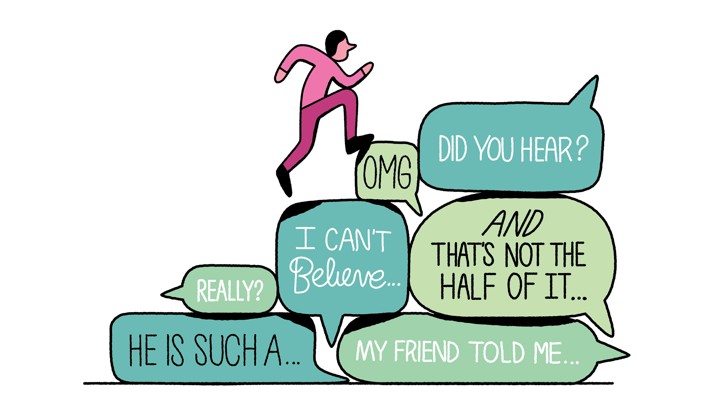
For DIY #3, I chose to focus on the intersections of two of the currently most flammable topics—fake news and the Corona virus pandemic. I decided to lay special emphasis on India due to the country’s long standing relationship with fake news as it continues to heavily impact it sociopolity and media culture. Being stuck at halfway across the world in a friend’s attic during a raging pandemic is hardly an ideal situation. As part of my obsessive overconsumption of media and “reading my feelings” to calm my nerves, I have made it a point to regularly converse with distant relatives and long-lost friends from back home. Due to these newly-revived relations, I had been receiving tonnes of messages targeting the Indian muslims for the spread of the virus ,which in historical fashion, questioned their true motives and loyalties. Being in journalism school in 2020, one cannot really go about without learning about fake news as it continues to pervade all domains of society. I, anyhow, make it a point to not trust anything I receive over WhatsApp as a forwarded message. Recently, WhatsApp has become the arena for political parties’ ideological battles as they gear up their respective IT cells to further rhetorics that could advance their political motives.

Originally uploaded on Vimeo

I started with contextual videos to lay the chassis of the argument as I tried to explain the details of how the pandemic had specifically impacted India. I explained the religious linkages to the issue at hand and how the political parties had been able to communalise the issue to feed into their agendas. I decided to insert interview clips of leaders from the ruling party with all their hateful dogwhistles against the muslim community. The evidenciary clips came next, and I explained the difference between their original and intended meanings by placing them in the right context. For fact checking purposes, I used the Alt News website as they had some thoroughly researched stories that I used for my video.

Next I cut out clips of renowned journalists, editors and political activists to provide the audience with some historical perspective and make them aware about the stakes of the conversation. They placed the simple fake videos in the wider rise of islamophobia in the Indian governmental and social structure and the governmental complicity in the same. To place their claims in the real world, I put in clips of real life interviews and videos of common muslims suffering economic and physical harm as a result of the online vitriol.

Sources:

Featured Image via Deccan Herald

Standard
Blog Posts

Public, Private, and Secret: Facebook’s Modern Day Data Piracy

Even with all the recent concerns about the obscene amount of influence tech giants like Facebook and Twitter hold over the sociopolitical climate of the world, it is really hard for people to pull themselves out of the social media drain and examine the ways these companies interact with their individual rights and liberties. When I downloaded my data as a part of my assignment, I had an opportunity to discover the sheer expanse of the wide-ranging knowledge that the social media giant had gathered as a result of my almost a decade worth of religious usage. The first thing that truly shocked me was that Facebook was in possession of years worth of messages sent and received through its Messenger application; I always assumed that these messages were encrypted and there was no storage of the exact messages on the Facebook servers. I guess this would explain the sudden emergence of elaborate Barneys’ advertisements on my timeline everytime I would barely utter the words “Chanel earrings” to my sister over Messenger in lieu of my mother’s birthday.

Credit: Photo by MICHAEL REYNOLDS/EPA-EFE/REX/Shutterstock (9623182q) Mark Zuckerberg CEO of Facebook Mark Zuckerberg testifies before the Senate, Washington, USA – 10 Apr 2018 CEO of Facebook Mark Zuckerberg (R) takes his seat to testify before the Senate Commerce, Science and Transportation Committee and the Senate Judiciary Committee joint hearing on ‘Facebook, Social Media Privacy, and the Use and Abuse of Data’ on Capitol Hill in Washington, DC, USA, 10 April 2018.

It was also thoroughly interesting to see how social media and advertisers are so tangled in the ways the extract and use a person’s information in order to sell their individual commodities—they might seem like separate entities functioning together out of fiscal necessity, however, their relationship is indeed symbiotic behind the scenes. By digging a little into the data, I found out that there was a shocking overlap between my “Ad Interests” as recorded by Facebook and the corresponding list of companies who chose to advertise their products and services to me. For example, the clothing brand Patagonia was a major company whose advertisements I repeatedly clicked on and somehow it also seemed to find a mention in my Ad interests (which I believe led to Patagonia choosing to specifically ply me with the advertisements that they did).

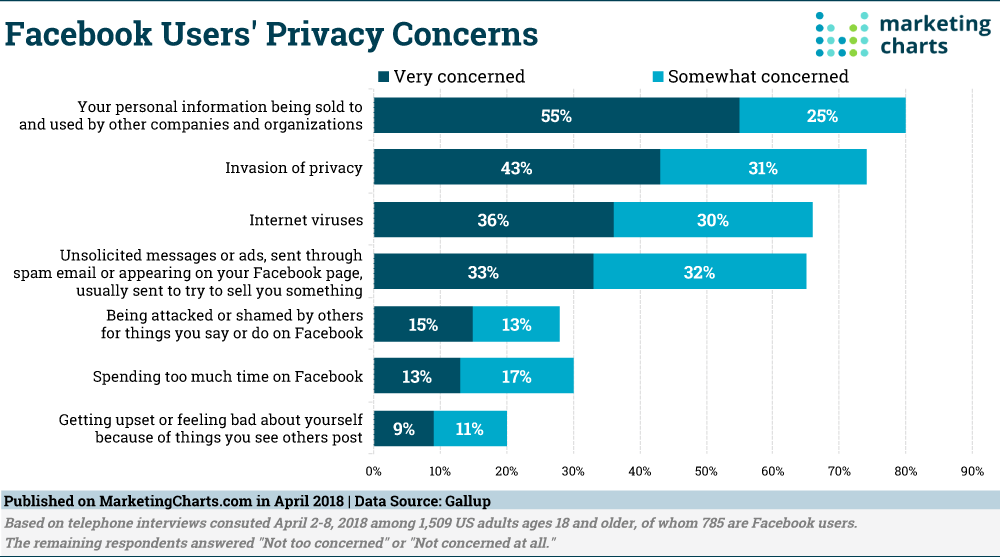
Gallup survey fielded from April 2-8, in the wake of the Cambridge Analytics story, found strong concerns on the part of Facebook users with the privacy of their data. 8 in 10 said they were very (55%) or somewhat (25%) concerned with their personal information being sold to and used by other companies and organization. That emerged as their top concern with using Facebook, ahead of various others including viruses and unsolicited ads. Source: MarketingCharts.com

Another discovery which was equally shocking was the fact that Facebook was in possession of a detailed contact list which included everyone’s phone numbers and email addresses. One would think that being a social media platform that exists in its own separate realm, Facebook would not be storing information that falls out of its scope. However, in this age of continuous corporate mergers and information transcending borders of specific platforms and applications, the lines of privacy and the question of access to data keep getting merged, and often diluted. Facebook’s access to phone numbers allowed it to sync up all my contacts in my phone and provide me with an extensive list of all the people also using the application. However, the motives of Facebook having access to the exact date and time each individual phone number was feeded into the phone is strange if not questionable. Lastly, it was horrifying to see my years worth of search history which I repeatedly happen to delete. Yet again, Facebook was clearly adding to its pile of my interests file by recording my entire search history (even the parts which I deleted) to provide the advertisers thoroughly researched and accurate data.

Featured Image via Pxyl.com

Standard
Blog Posts

Coping Through Media in The Age of Corona and Quarantine

1)​ ​According to my Screen Time (or similar) app, I have been spending approximately nine hours a day on my phone lately. This is more than normal times.

2)​ ​The social media platforms I use most are:

#1 Instagram. Time spent per recent day: 2 hours

#2 Twitter. Time spent per recent day: 90 minutes

3)​ ​This is how I get most of my news (going through social media/going straight to a news app, radio, etc.):

  • Up First Podcast by NPR
  • Hourly Updates by journalists on their Twitter handles
  • YouTube uploads by News Networks

While the internet seems to be inundated with the content related to the novel coronavirus and its wider socio-economic impact, there isn’t really a lot being said about the different ways this entire situation has completely uprooted higher education and the daily lives of millions of college students across the country. In situations like these when there is a pressing need to have serious adult conversation, there is very little room in public discourse for emotional talk, which is especially deemed even more trivial when coming from young adults and teenagers. As residence halls emptied out and campus became eerily quiet, I stayed put for the longest time and witnessed the deconstruction of a community that I had fostered around me. Amidst all the scary statistics and the press commentary, I came across an article written by a college professor for the New Yorker that detailed all that was being lost as education was being virtually translated to students instead of physical transmission in a lecture hall. As a freshman who relied on campus for both physical and emotional needs, the article struck a chord with me as it was truly empathetic in its tone and made sure to sketch out the nuances of students’ varying conditions. I really liked the way the author did justice to the insignificant yet vital in-person experiences that form the crux of a true learning experience. It helped that the source of the article was someone who has been, for years, an integral part of the college narratives as an educator and can provide an insight into the implications of the abruptness of the situation. 

Previously, I used to filter my news consumption by regulating my media diet—I used to start my diet with NPR podcasts, skimmed through the New York Times website between classes, and ended the day with some comfort opinion talk show on CNN/MSNBC. However, in this highly volatile situation which has deeply impacted my life and continues to hold my family hostage in a house thousands of miles away from me, I have given into the urge to consume information as it trickles in, despite the source. It has led to a lot of junk consumption of Twitter news that provides any sort of development on the ever-emerging situation—from unverified citizen reports to simple rumours floating on the net. It is a scramble to latch onto as much of the information as humanly possible. Instagram, however, eats up a majority of my time as it is the place I chose to go to reminisce campus life when all the news gets really overwhelming and I am craving a little positivity. Considering it has not been long since everything transpired, there is a lot of lingering nostalgia about college life and it is reflected in people’s posts on Instagram. Since I am trying to hold onto the memories of my freshmen year that will never return, I flock to Instagram as it is my only virtual connection to college friends and the year that was.

Featured Image via The New Yorker

Standard
DIY

Abortions to Get, Miles to Go: A Black Woman’s “Far” Fetched Dreams of Reproductive Health in America

For DIY #2, I chose to highlight the state-specific policies on abortion, and how the disparities in accessible abortion services across states disproportionately impacts black women. While the state’s restriction on reproductive rights harms women all across the social order, Black women often bear the worst of it as they often lack the resources that enable White/Asian women to travel across state lines to receive abortions in supportive environments.

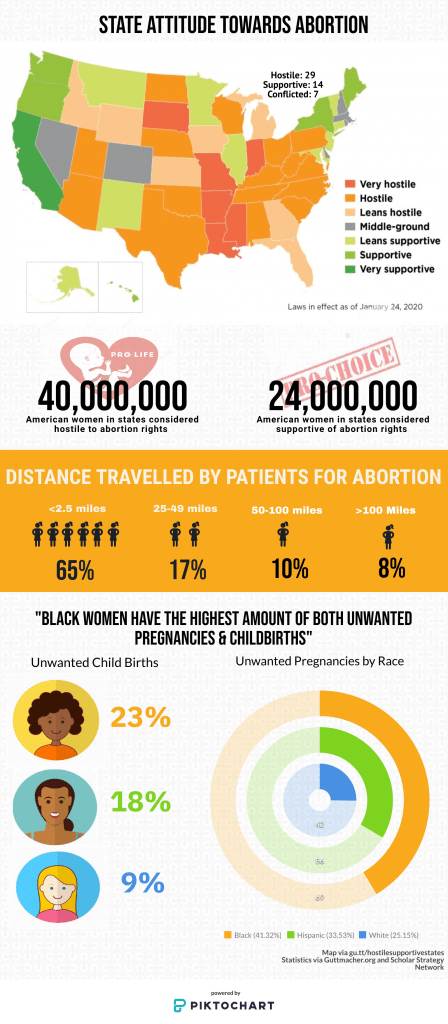
Currently, nearly 40 million U.S. women of reproductive age (58% of the total number) live in states that have demonstrated hostility to abortion rights. In contrast, 24 million women of reproductive age (36% of the total) live in states that have demonstrated support for abortion rights.

Guttmacher Institute

I chose to start my infographic with a map visualized by the Guttmacher institute that used a distinct color scheme that helps the audience visualise the ground-level situation of reproductive rights with ample state-specific nuances. Even though it’s a humanistic issue at the core, there are two conflicting dominant political ideologies and I chose to use the symbols of the prochoice and the prolife movements while providing the raw statistics about the difference between women living pro and anti-abortion states. I plastered the bold text over the symbols and declined their opacity to reiterate the need to put the countless human lives before political agendas.

According to the Centers for Disease Control, from 2006 to 2010, 9% of births to non-Hispanic white women were defined as unwanted, compared to 18% for Hispanic women and 23% for Black women. 

Scholars Strategy Network

For depicting the amount of distance that patients travel to get abortions, I continued with the tangerine color scheme and used icons of women to symbolise the percentage of women in each distance bracket. Furthermore, I mentioned the exact percentage under the icons for the sake of clearance. To visualise the different races while talking about the unwanted birth rates, I put general sketches of each race and put the percentage next to it. For conveying the date about unwanted pregnancies and juxtapose the racial differences, I relied on an old-school swatch graph and maintained the same color palette that I used for the ‘unwanted births’ statistics.

Featured Image Via Guttmacher Institute

Standard
DIY

Children Don’t Lie and Neither Do their Dead Bodies

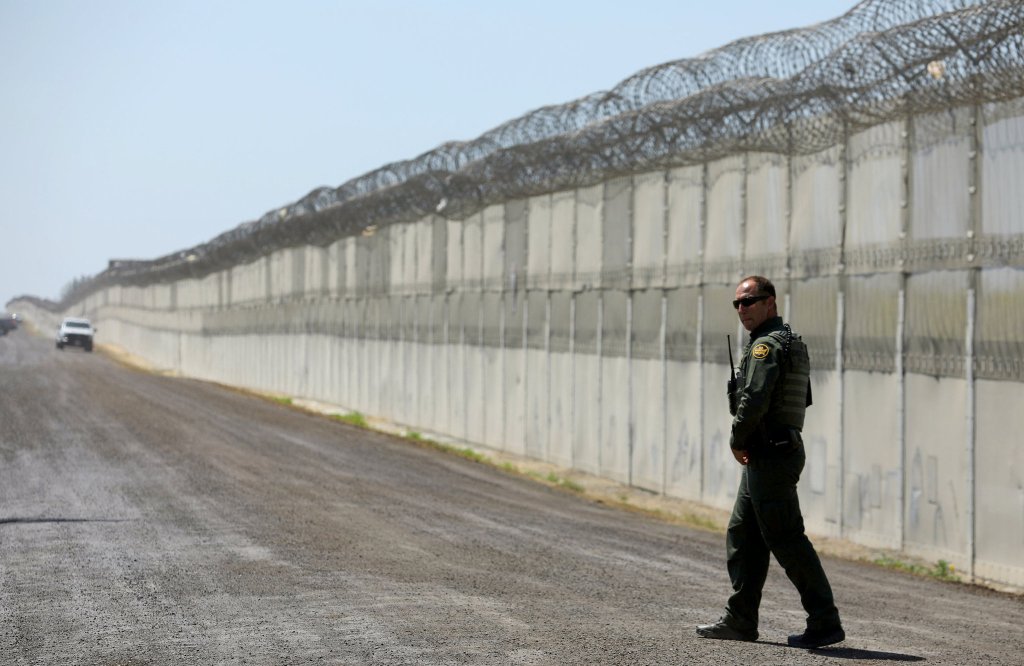
For my first DIY Project for ASCJ200, I decided to manipulate the meaning of the iconic image of a dead syrian refugee, Alan Kurdi, taken by Nilüfer Demir in 2015 on the Mediterrean coast of Turkey. As part of my effort to manipulate the meaning of the image, I decided to crop the body of Kurdi from the image and imposed it in an image of the wall at the Southern border of the United States. I wanted to draw an emotive parallel between the past horrors of the Syrian refugee crisis to the current happenings at the US-Mexico border due to Trump administration’s anti-immigration and family separation policy.

Image of the dead Syrian kid, Alan Kurdi, on the shores of Turkey. Captured by Nilüfer Demir, 2015. Via TIME Magazine.

By placing the kid’s dead body next to a border patrol officer guarding the wall, the image makes a statement about the sheer inhumane treatment of refugees and asylum seekers who are fleeing the sociopolitical carnage and pillage in their own home countries. The kid was strategically placed further away from the wall and the guard to make the corpse a normative feature of the arid depersonalised imagery of the border. The insertion of common anti-immigration slogans and posters on the border wall and their intentional proximity to the patrol agent is to paint the heavily polarised discourse on immigration and the shameless complicity of the state machinery in streamlining the mistreatment of refugees coming to America. I used the transform tools (Scale, rotate, Distort, Skew) to position and assimilate the plethora of posters into the primary image. In order to make them thematically blend in with the background, I adjusted the brightness and contrast of the different layers of the image and also slightly blurred them to provide the viewer with a sense of depth and distance.

Though we shift context of Alan Kurdi’s death in the final image, it amplifies the universal nature of the suffering and pain that refugees across the world endure. By taking an iconic image from a separate geopolitical setting and reincarnating into a meaningful message for folks back home in America, the image shines a light on the real grassroots impact of policies birthed in closed-door conference rooms in Washington.

Secondary Images:

MAGA Poster

Donald Trump Support Rally in San Diego, CA

Refugees are Not Welcome Poster

Protest Against US Acceptance of Syrian Refugees

Uncle Sam Poster

Border Wall Image

Standard
Blog Posts

Gossip Doth Not Maketh Journalism

In the New York Times article, “Still Standing, Jared Kushner and Ivanka Trump Step Back in the Spotlight”, Katie Rogers and Maggie Haberman detail the clandestine yet significant role of Ivanka Trump and Jared Kushner in the Trump Administration and the underlying Republican party. Maggie Haberman is a seasoned Pulitzer prize-winning political journalist with over 24 years of reporting experience and a unique insight into Trump’s brand of politics (she’s been branded as Trump’s snake charmer by Slate). Katie Rogers is the White House correspondent for the Times with a strong foothold in the intersection of Washington politics and popular culture. The writers of the aforementioned article do have credible experience and knowledge regarding the topic at hand, but their article does waver when put through the SMELL test.

Ivanka Trump’s seen interacting with world leaders during the week 2019 G20 Summit. Clip via The Guardian

While the co-authors pen down a detailed account of the couple’s tumultuous and ever-evolving journey since the inception of Donald Trump’s political existence, the article’s deeper purpose is to draw a definition of the often cloudy nature of the couple’s role in the administration for the sake of public clarity. In their desperate efforts to pull the curtains on the details of Javanka’s glamorous and very obscured life, they actively peddle a readymade, store-bought story with a message set in stone, while acknowledging their lack of direct access to the focal figures of the profile-esque piece. The irony is apparent. The sourcing of the several claims about Trump’s general outlook towards the couple and the many details shared about their daily life is either through members of Trump’s cabinet (who couldn’t be farther from the couple’s household life and their familial relationship with the President) or simply omitted. While the quotes from Steve Mnuchin to Sarah Sanders echo a company line tailored by a PR team, other claims seem to stem from “her (Ivanka) supporters” or anonymous spokespersons. Whether it is the omission of hyperlinks and sourcing information from “someone familiar with her (Ivanka) thinking” during the discussion about the closure of Ivanka’s fashion brand or making speculative claims about Jared Kushner’s plans for the “lingering resistance” in the GOP without backing them up with any sources, the writers don’t prioritize the need to provide their readers with independent and informational sources. The foundation for the article seems to solely be laid on a mélange of chatter, whispers, and rumors garnered through sources shrouded in secrecy by the Gossip Girl of the West Wing.

The sheer lack of hyperlinks along with excessive reliance on writers’ personal brands to establish trust demonstrates the writers’ assumption of political jargon as universal knowledge and a failure to solidify the article’s argument in the readers’ minds. Due to the passivity of the article when dealing with secondary sources, it is to be assumed that much of the information is sourced from the writers’ personal knowledge. While Haberman clearly has proximity to the action due to her role as a White House correspondent and Rogers is an enigma in the world of journalism, the article even shies away from directly crediting its own writers for inside scoops, thus leaving a void of an evidentiary chassis for the article’s thesis.

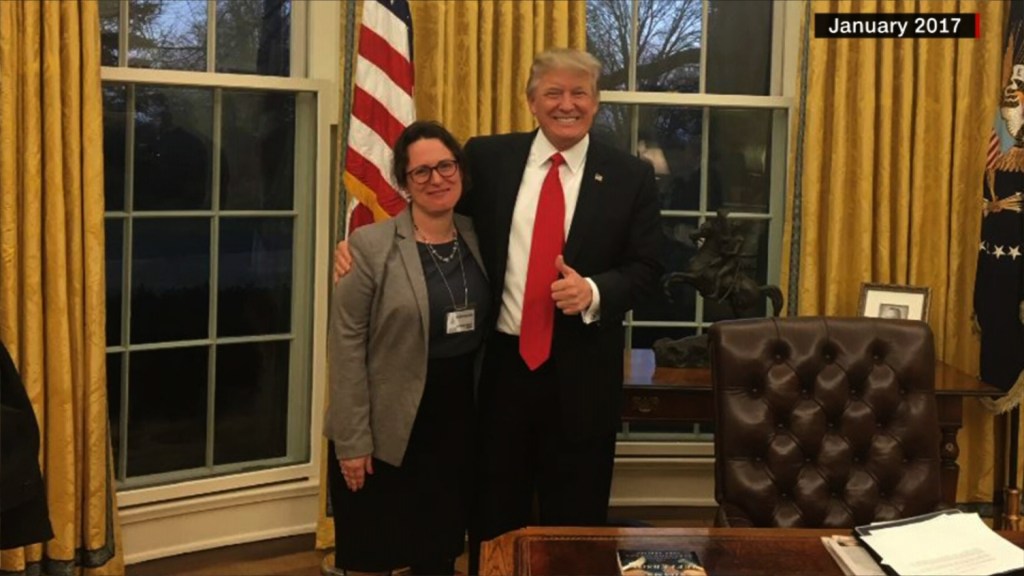
President Donald Trump poses for a picture with NYT White House Correspondent Maggie Haberman. Image via CNN

When it comes to motivation, Haberman has been a balanced reporter and has suffered attacks from both sides of the political aisle: from the left for normalizing the President and from the right for her critical coverage of the Trump campaign. However, Haberman’s connections to the Trumps cannot be ignored. Haberman’s mother, Nancy Haberman, is the Executive Vice President of Rubenstein — an NYC based PR firm that has been continuously linked to the Trumps and the Kushners (Jared Kushner is an active client and Nancy Haberman handled Donald Trump’s public relations during one of his divorces). Due to the lack of clear sourcing for the multiple insider scoops, many have often questioned Haberman’s sourcing methods and their ethicalities in the wider context of her connection to the Trump household.

A screenshot from the “About Us” page of Rubenstein.com showing Nancy Haberman as the Executive Vice President.

As said before, the article’s line of logic tries to continuously moderate between the image that it paints the power couple in — the tokenistic representation of America’s nepotism problem starting catty battles with the real adults vs. the real ringmasters running the show in D.C. from the sidelines. While the deck of the article marks the couple’s resilience to criticism as they take the wheel on potential policy projects, the concluding portion of the piece makes Jared and Ivanka as mere vestigial ornaments in the grand scheme of national politics, serving as nothing but direct channels of communication to the center of the real power i.e. the oval office. This back and forth between viewpoints is visible throughout, switching between statements from the couple’s allies and their detractors. The balanced coverage of the conflicting points of view functions to rein in the skeptics from both sides as it gives them coverage to ruminate on. One of the major lackings of the article is the accounts from former aides who, the article speculates, the couple had undercut/pushed out. Having a perspective of someone who bore the brunt of the Javanka influence in the White House could have provided the reader a better insight into the extent of the couple’s influence over what goes on at 1600 Pennsylvania Avenue.

Featured Image via The Atlantic

Standard
Blog Posts

Best of Both the Worlds: A Media Consumption Reflection

Like any other smartphone bearing person, I begin my days snoozing the alarms and falling prey to attention-grabbing Twitter notifications. In order to avoid anymore tabloid-y, halfcooked news, I avoid social media for a bit and tune into two of my regular NPR podcasts. They provide with a synthesis of facts and relevant commentary on the happenings around the world and the daily dosage of the American political brouhaha. Post that, I get my pop culture fix from Instagram (which is often inundated with directly forwarded memes from my best friend), like a true Gen-Zer attending college. Irrespective of the purpose (academic or leisure), my love for books has stood the test of time and they still form a focal part of my daily information bundle.

While I try to tackle implicit bias ingrained in social media’s infamous algorithms that expose people to selective news by going on a plethora of media websites, I also rely heavily on The View to provide me with varying perspectives on current hot topics. The Co-hosts’ differing perspectives often trigger in-depth searches for other forms of media on Google and YouTube. Eventhough I often end my days with a book tucked in the bed with me, I make it a point to check in on major headlines back home in India throughout tuning in on live broadcasting of morning news through Youtube livestreams.

In terms of interactions, I barely leave comments or virtually interact with media. Instead, I prefer paraphrasing information from pieces to people in person and having group discussions about the concerned topics over meals. I am also a firm believer in force-feeding people information that I feel is vital for them by sitting them down and reading an entire article out loud to them. For me, the priority is to educate and have a conversation with the community of people that directly surround me.

As a student of Journalism, I have always made an active effort to make my media diet as wholesome and holistic as humanly possible. In this age of implicit media biases and the blurring of boundaries between opinion and news, anyone who wishes to be rightly infomed has to be very conscious of the media they come into contact with. Throughout the years, as every traditionalist teenager succumbed to the pressures of social media and online media, I refused to budge from my fortress of print and TV broadcasts. However, moving to America has drastically changed the way I engage with and receive my news. Due to the limited time availability and the inaccessibility of print media, I have made a shift towards digital platforms that are freely available on the internet and can compress a bunch of information into a format that makes it digestible into my limited breaks between classes. Since this change, I have tried to preserve at some minimal amount of consumption of filtered and authentic sources of media (like print, traditonal broadcast). Currently, my media diet is wide ranging, highly nebulous and cuts across multiple modes of communication, where I am trying to figure out the mediums that suite my appetite and best fulfil my academic and personal needs.

Featured Image via Tehran Times

Standard